

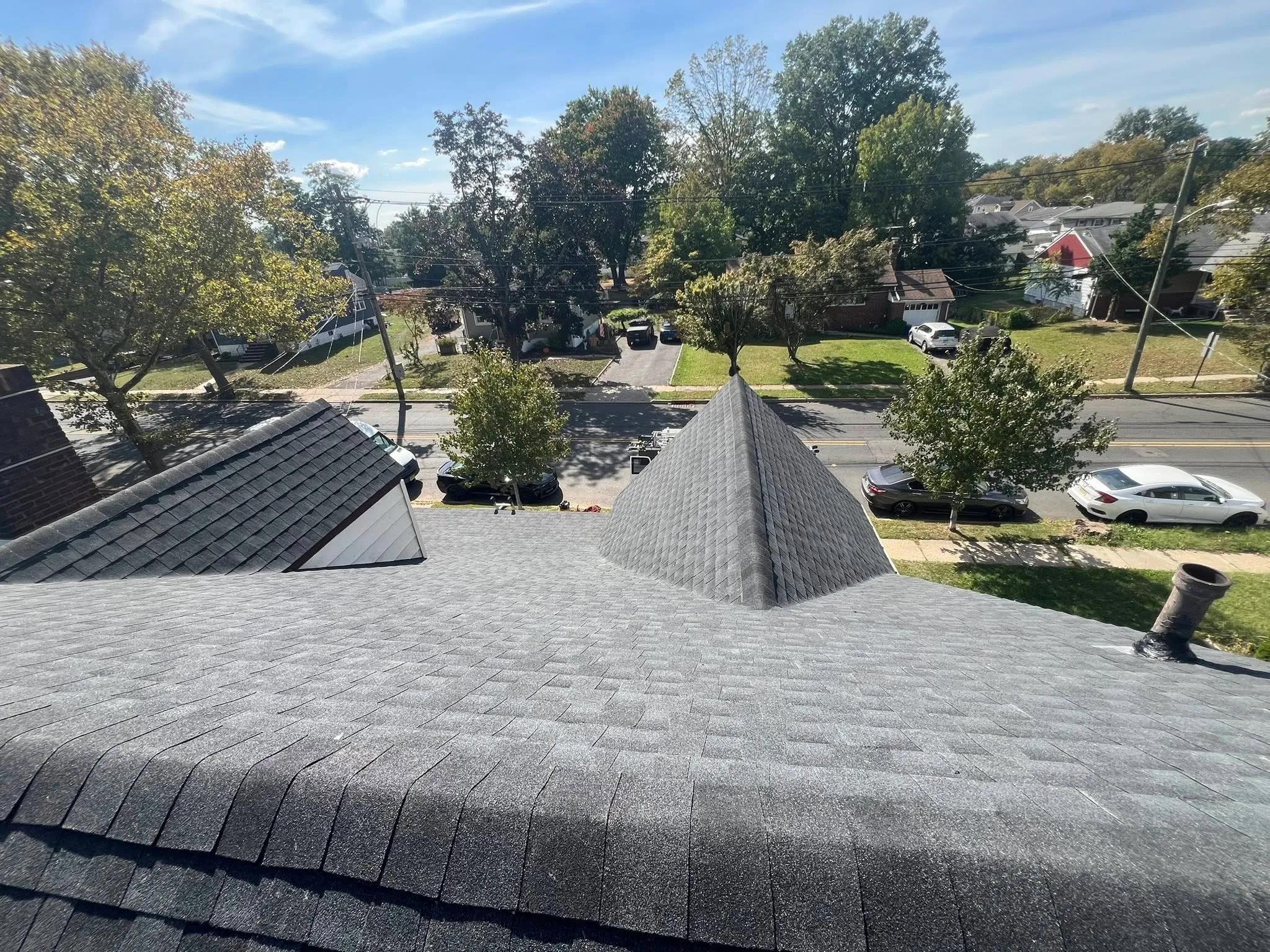
TL;DR
Credentials: License number, liability insurance, workers' comp, manufacturer certifications
Scope: Exact materials by brand, underlayment grade, ventilation plan, deck inspection process
Payment: Deposit amount, milestone schedule, never 100% upfront, never cash
Warranty: Workmanship coverage in writing, what voids it, how long it lasts
The red-flag answers: Vague responses, pressure to sign, refusal to put anything in writing
Introduction
The questions you ask a roofing contractor before signing are the difference between a clean install and a five-figure regret. Most homeowners ask 3 or 4 questions, get vague answers, and sign anyway. The real pros expect 15 to 20 questions and welcome them, because every answer is a chance to demonstrate competence.
This guide gives you the exact questions, organized by category, with the red-flag answers that mean walk away. If you haven't read the broader guide to hiring a roofing contractor, start there first. This post goes deeper into the conversation itself.
How to Use This List
Print these questions or save them to your phone. During each contractor meeting:
Ask the questions in order
Listen for confident, specific answers in plain English
Note any deflection, vagueness, or pressure tactics
Compare the answers across all three contractors you're interviewing
A real pro will answer most of these without needing to look anything up. If a contractor needs to "check and get back to you" on basics like their license number or warranty terms, that's a real signal.
Credentials and Verification (Questions 1-5)
These confirm you're dealing with a legitimate business, not a fly-by-night operator.
1. What is your HIC license number?
Why it matters: In New Jersey, every home improvement contractor must hold a valid HIC license from the Division of Consumer Affairs. The number should appear on the truck, the business card, the estimate, and the contract.
Red-flag answer: "I'll send it over later." A real contractor knows this number.
Verify it: Look up the license at the NJ Division of Consumer Affairs HIC portal before signing anything.
2. Do you carry general liability insurance, and can your insurer email me the certificate directly?
Why it matters: If a worker damages your home or a neighbor's property, this insurance pays. Fake certificates are common. Having the insurer email it bypasses any document tampering.
Red-flag answer: Hesitation, or offering to "show you a copy" instead of having the insurer send it.
3. Do you carry workers' compensation insurance for every person on the crew?
Why it matters: If a worker falls off your roof and the contractor doesn't have workers' comp, the worker can sue you. This is the most underrated insurance question in the trade.
Red-flag answer: "My guys are subcontractors, they have their own coverage." This is usually not true and creates personal liability for you.
4. Are you certified by the manufacturer whose materials you'll install?
Why it matters: Certifications like GAF Master Elite, Owens Corning Platinum Preferred, or CertainTeed mean the contractor has been vetted by the manufacturer and can offer extended warranties. Only 2-3% of US roofers hold these top-tier certifications.
Red-flag answer: "We can install any brand." Technically true, but if they're not certified, you lose access to the extended manufacturer warranties.
5. How long have you been in business at this address?
Why it matters: Established physical addresses mean the contractor can be held accountable. New LLCs with no track record are how storm chasers operate.
Red-flag answer: Vague answers, P.O. boxes, or "we just opened the local office."
Scope of Work and Materials (Questions 6-10)
These confirm you actually know what you're paying for.
6. What is the exact brand and model of shingle you're installing?
Why it matters: "Architectural shingles" is not a brand. "GAF Timberline HDZ" is. The model determines warranty length, wind resistance, and appearance.
Red-flag answer: "We'll figure that out when we get there." Never sign without the brand and model in writing.
7. What underlayment will you use, and what's the brand?
Why it matters: Synthetic underlayment outperforms felt by a wide margin and is closer to the industry standard in 2026. A certified roofing contractor always specifies the underlayment brand, gauge, and coverage in writing. Cheaper bids often hide felt as a cost-saver.
Red-flag answer: "Whatever's standard." Standard varies by contractor. Get the brand.
8. Will ice and water shield be installed, and where?
Why it matters: NJ building code requires ice and water shield in eaves and valleys due to ice dam risk. Some contractors skip it on side eaves to save money.
Red-flag answer: "Only where needed." Define "needed" in writing.
9. How will you handle ventilation, and will you inspect the existing setup?
Why it matters: Poor attic ventilation voids most shingle manufacturer warranties. A real pro inspects the attic before quoting.
Red-flag answer: "We'll keep what you have." If they don't look at it, they can't know.
10. What's your process when you find rotted decking or deck damage after tear-off?
Why it matters: This is one of the most common change-order triggers. You need to know how they communicate it and how it's priced before the work starts.
Red-flag answer: "We'll let you know when we find it." Demand a per-sheet price in writing upfront ($75 to $150 per 4x8 sheet of OSB is typical in NJ).
Project Management (Questions 11-14)
These confirm the job will actually run smoothly.
11. Who is my direct point of contact during the project?
Why it matters: You need one named person, not a rotating cast. If something goes wrong mid-project, knowing who to call saves hours.
Red-flag answer: "Just call the office." Get a specific name and phone number.
12. Will my project use your direct employees or subcontractors?
Why it matters: Subcontractors aren't automatically bad, but you should know. They affect insurance coverage, accountability, and consistency of quality.
Red-flag answer: Vague answers about "our network of partners."
13. How do you handle weather delays during tear-off?
Why it matters: A roof that's been torn off but not finished is a flood waiting to happen if a storm rolls in. The right contractor uses tarps, plans for weather, and won't start a tear-off they can't finish before rain.
Red-flag answer: "It's not really an issue." It absolutely is.
14. Will you pull the building permit, or do I?
Why it matters: Most NJ municipalities require permits for full roof replacement. A contractor pulling the permit signs their name to the work, which is what you want. Homeowners pulling permits to save money often regret it when problems surface later.
Red-flag answer: "We can skip the permit." Illegal and a warranty-voider. Walk away.
Payment Terms (Questions 15-16)
These protect your money.
15. What is your payment schedule?
Why it matters: A reasonable schedule is 10-25% deposit, a milestone payment on material delivery or tear-off, and the final balance after completion and inspection.
Red-flag answers:
"We need 50% upfront"
"Cash discount available"
"Full payment before we start"
Never pay more than 30% upfront. Never in cash. The Federal Emergency Management Agency's General Contractor Checklist explicitly warns against these patterns.
16. Will you waive my insurance deductible?
Why it matters: This is a trick question. The right answer is no, because waiving deductibles is insurance fraud and illegal in NJ.
Red-flag answer: "Sure, we can work around that." Walk away. They're either committing fraud or planning to inflate the claim, both of which expose you to liability.
Warranty and Cleanup (Questions 17-18)
17. What's your workmanship warranty, in writing?
Why it matters: Material warranties come from the manufacturer. Workmanship warranties come from the contractor. Both should be in writing.
Red-flag answers:
"Standard industry warranty" (no such thing)
Verbal warranty promises
Workmanship warranties under 2 years
Most reputable NJ contractors offer 5 to 10 years of workmanship warranty.
18. What does your cleanup process include?
Why it matters: Roofing creates a massive amount of debris and stray nails. A contractor who skips magnetic-sweep cleanup leaves you with flat tires and pet injuries for months.
Red-flag answer: "We try to clean up." Try is not an answer. Daily cleanup and final magnetic sweep should be in the contract.
How to Interpret the Answers
After three contractor meetings, score each one on:
Specificity: Did they answer with concrete numbers and brand names, or with vague generalities?
Documentation: Did they offer to put their answers in writing, or did they push for verbal agreements?
Comfort with scrutiny: Were they patient with your questions, or did they pressure you to decide?
The contractor who handles 18 detailed questions without flinching is the one to hire. The contractor who deflects half of them is the one this post was written to help you avoid.
If one of those questions is about cost, here's what a roof leak actually costs to fix in 2026, useful context before you compare quotes.
Frequently Asked Questions
What is the 25% rule in roofing?
The 25% rule has two meanings. In pricing, a bid more than 25% below others usually has missing scope, downgraded materials, or unlicensed labor. In storm claims, when more than 25% of a roof is damaged, most insurers will approve full replacement rather than partial repair.
What are good questions to ask a roofer?
The most important questions cover credentials (license, insurance, certifications), materials (brand, model, underlayment), scope (ventilation, ice and water shield, deck inspection process), payment (schedule, deposit, deductible policy), and warranty (workmanship terms, length, and what voids it).
How can you tell a good roofer?
A good roofer answers detailed questions confidently in plain English, provides written estimates with exact brands and timelines, has verifiable license and insurance, holds manufacturer certifications like GAF Master Elite, offers a workmanship warranty in writing, and never pressures you to sign on the first visit.
What not to say to a roof insurance adjuster?
Don't admit fault, speculate about the cause of damage, or use phrases like "old roof" or "needed replacing anyway." Stick to facts about when the damage occurred and what you observed. Don't accept the first offer without comparing it to a contractor's independent damage assessment.
How many contractors should I get quotes from?
Get at least three written quotes. Fewer than three and you can't tell market rate from outlier pricing. More than five and you'll struggle to make a decision. Three is the sweet spot for comparing materials, warranty terms, and pricing without analysis paralysis.
Final Word
The right contractor wants you to ask these questions. They expect it. They have answers ready.
The wrong contractor finds them annoying, irrelevant, or aggressive. That's the signal.
📞 Call (201) 364-2084 for a written quote with itemized scope, verifiable HIC license, and answers to every question on this list. Golden Hammer Roofing & Chimney is a licensed NJ contractor serving residential and commercial properties across all 21 NJ counties.
The right contractor isn't afraid of your questions. They welcome them.